

Why Marketing Automation and AI Projects Stall
And why the real challenge is organizational – not technicalMarketing automation and AI projects rarely stall because of technology.
They stall because of how organizations work with data.
Most companies today have no shortage of data. They can capture it, store it, and structure it effectively. But turning that data into meaningful action is a different challenge entirely.
Data is not just a technical asset – it exists in levels of complexity, shaped by how your organization captures, structures, and ultimately interprets it.
Complexity Levels of Data
As data becomes more useful, it also becomes less objective.
It moves from recorded facts to interpretations of how the business sees the world. And as that shift happens, the nature of the challenge changes as well.
Data Complexity Levels
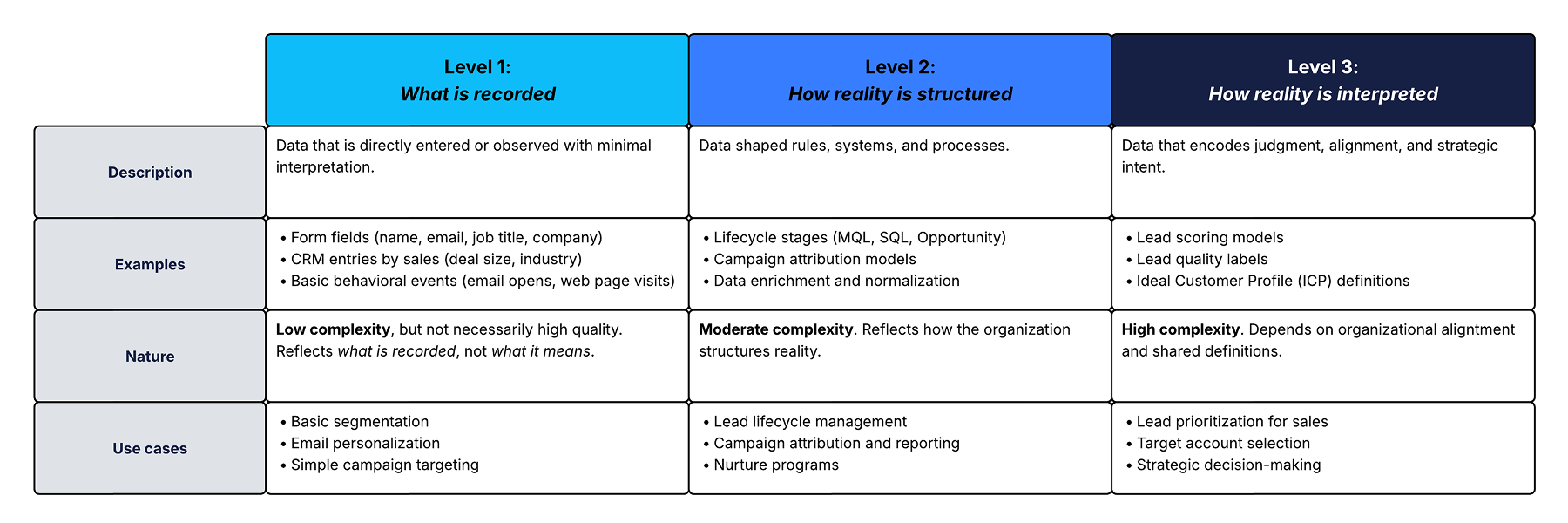
As you move from captured to interpretive data, the potential value increases – but so does the need for alignment.
Most organizations operate effectively at Level 1 and Level 2. They capture data and structure it through systems, processes, and workflows.
But the transition to Level 3 is where things become difficult.
From Data to Change
The real value of data doesn’t come from collecting or structuring it – it comes from interpreting it and acting on it.
This is where most organizations stall.
Not because they lack data, but because they can’t align on what it means or how to use it.
Value vs complexity curve
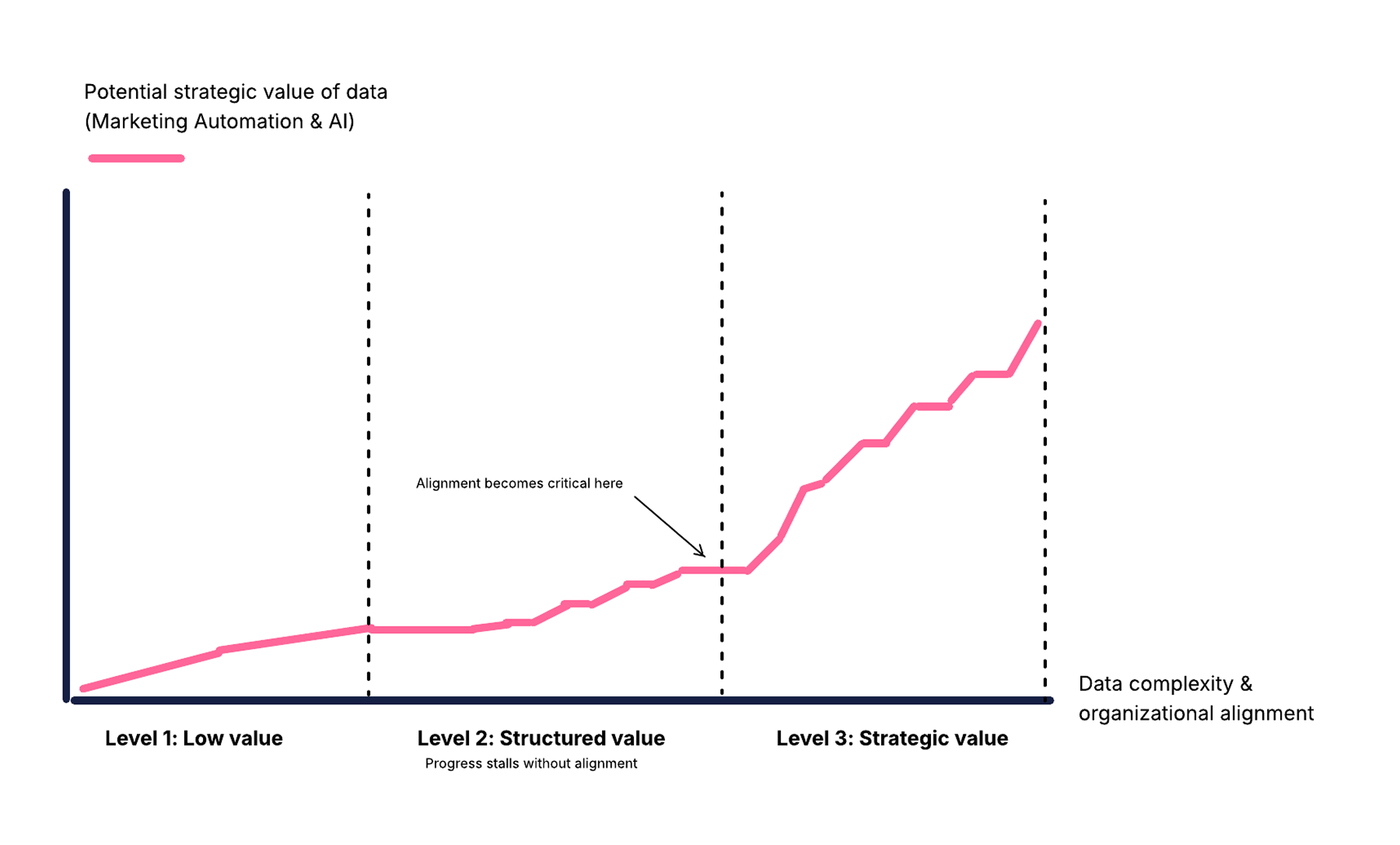
At Level 1 and Level 2, the challenge is largely technical:
- Capturing data
- Structuring it
- Building systems and workflows
At Level 3, the challenge shifts.
Data becomes interpretive. It requires judgment, shared definitions, and cross-functional alignment.
- What qualifies as a good lead?
- Which customers should we prioritize?
- What signals actually matter?
These are not technical questions – they are organizational ones.
And that shift – from structure to interpretation – is where progress slows. Alignment is no longer implicit. It has to be actively built.
 Why Change Management Matters
Reaching organizational alignment is not just a matter of agreement.
It requires changes in ways of working, processes, and behaviors across the organization. It affects how teams collaborate, how decisions are made, and how success is defined.
In other words, it requires deliberate change.
Marketing automation and AI don’t just introduce new tools. They introduce new ways of working:
- From campaigns to customer journeys
- From intuition to data-driven decisions
- From siloed execution to shared ownership
This requires people to:
- Adopt new processes
- Trust new signals
- Align on new definitions
- and, often, let go of existing habits
That doesn’t happen on its own.
It requires deliberate change management.
Organizations that succeed treat alignment as a capability – something that is actively built and maintained, not assumed.
The Real Bottleneck
The limiting factor in most marketing automation and AI initiatives isn’t technology or data quality.
It’s the organization’s ability to align, adapt, and act.
Because the moment data starts requiring interpretation, it stops being a technical challenge – and becomes a change management challenge.
The companies that succeed are not necessarily the ones with the most data or the most advanced tools.
They are the ones that are able to create alignment around what the data means – and translate that into coordinated action.
Final thought
In working with organizations on marketing automation projects, a common pattern emerges.
Most efforts naturally focus on capturing and structuring data – getting systems in place, ensuring data quality, and building workflows.
But the transition to interpretive data often comes as a surprise. Not because it is unimportant, but because it introduces a different kind of challenge – one that requires alignment, shared definitions, and changes in how teams work together.
If you want to unlock the full value of marketing automation or AI, don’t just invest in better data or better tools.
Invest in alignment.
Invest in shared understanding.
And most importantly – invest in your organization’s ability to change.
Ready to strengthen your marketing automation setup?
Let’s explore how Atcore can help you scale smarter marketing operations, customer data, and activation.
